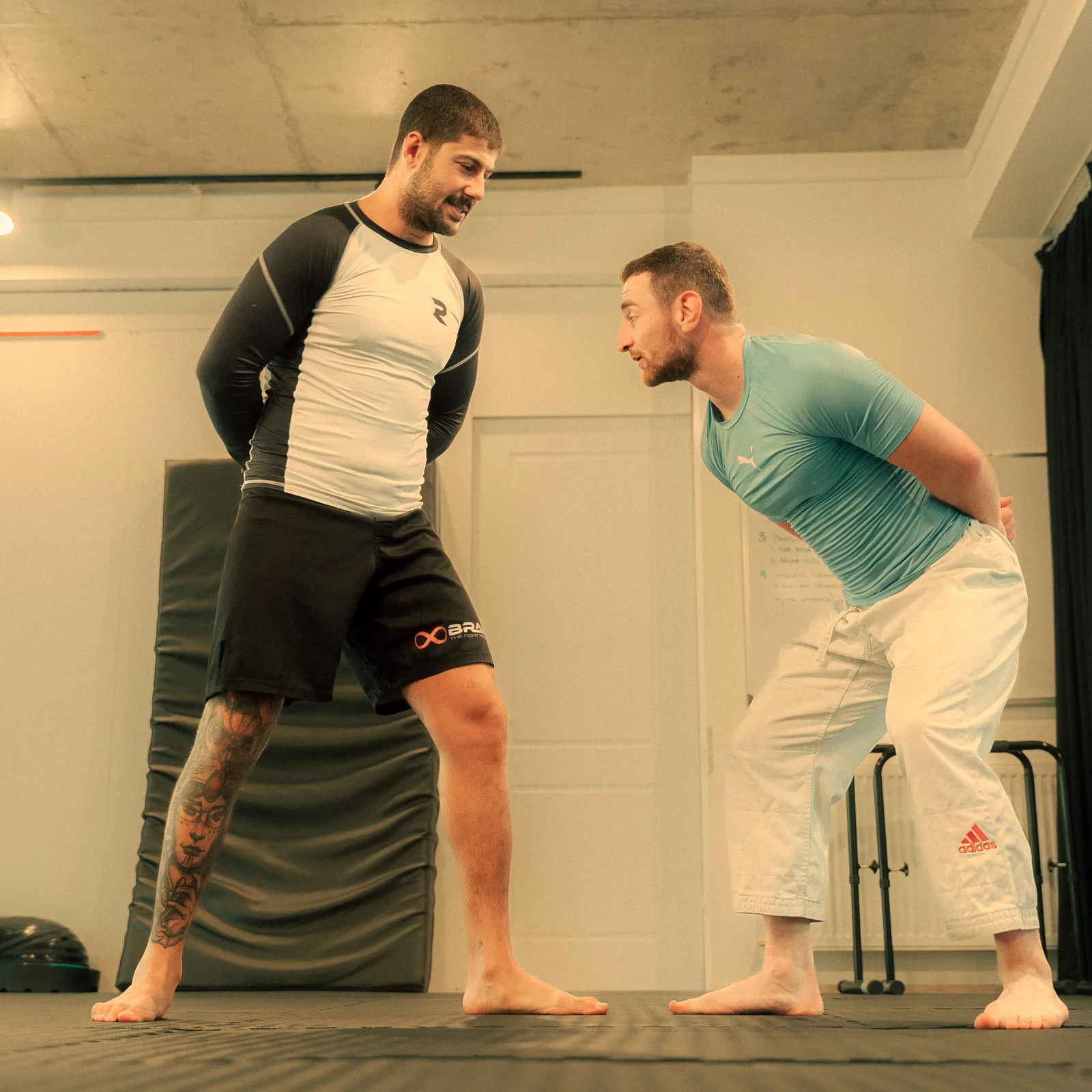
2026 Camp Shortlist
The Best Combat Sports Camp in Georgia: How to Choose Yours for 2026
Six combat sports camps, one Tbilisi facility. What to verify before you pay, who each camp is actually for, what the price covers, and how the 2026 dates work.
Quick answer
The best combat sports camp in Georgia is the one that matches your sport and publishes everything you need in order to book a flight: a fixed start date, a price with the inclusions listed as nouns, and an honest answer about who the week is not for.
Six camps — MMA, wrestling, boxing, kickboxing, BJJ and judo — run out of the same Tbilisi facility on the same calendar. Modules start on the first Tuesday of every month and last seven or fourteen days, from EUR 500 training-only up to full board at EUR 990 for a week of training, meals and a hotel bed.
So choose on the sport first, then on the length. Everything else is the same week in the same building.
Camps to choose from
6 sports, one facility
Start dates
First Tuesday of every month
Module length
7 or 14 days
From
EUR 500 training only
What "best" has to mean when you are booking from another country
You cannot walk into a camp in Tbilisi to see whether you like it. So best cannot mean atmosphere or vibe — it has to mean the things you can check from a laptop before your money leaves the country.
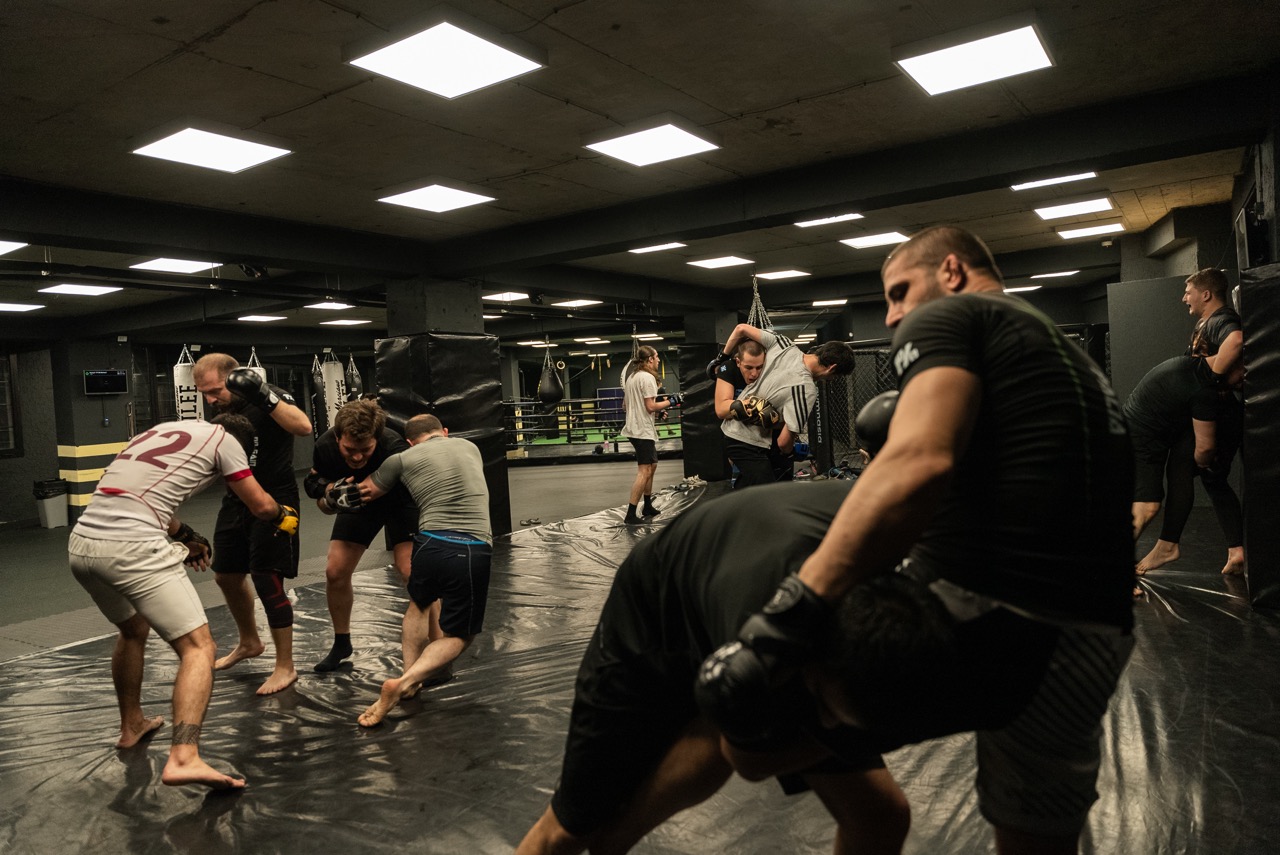
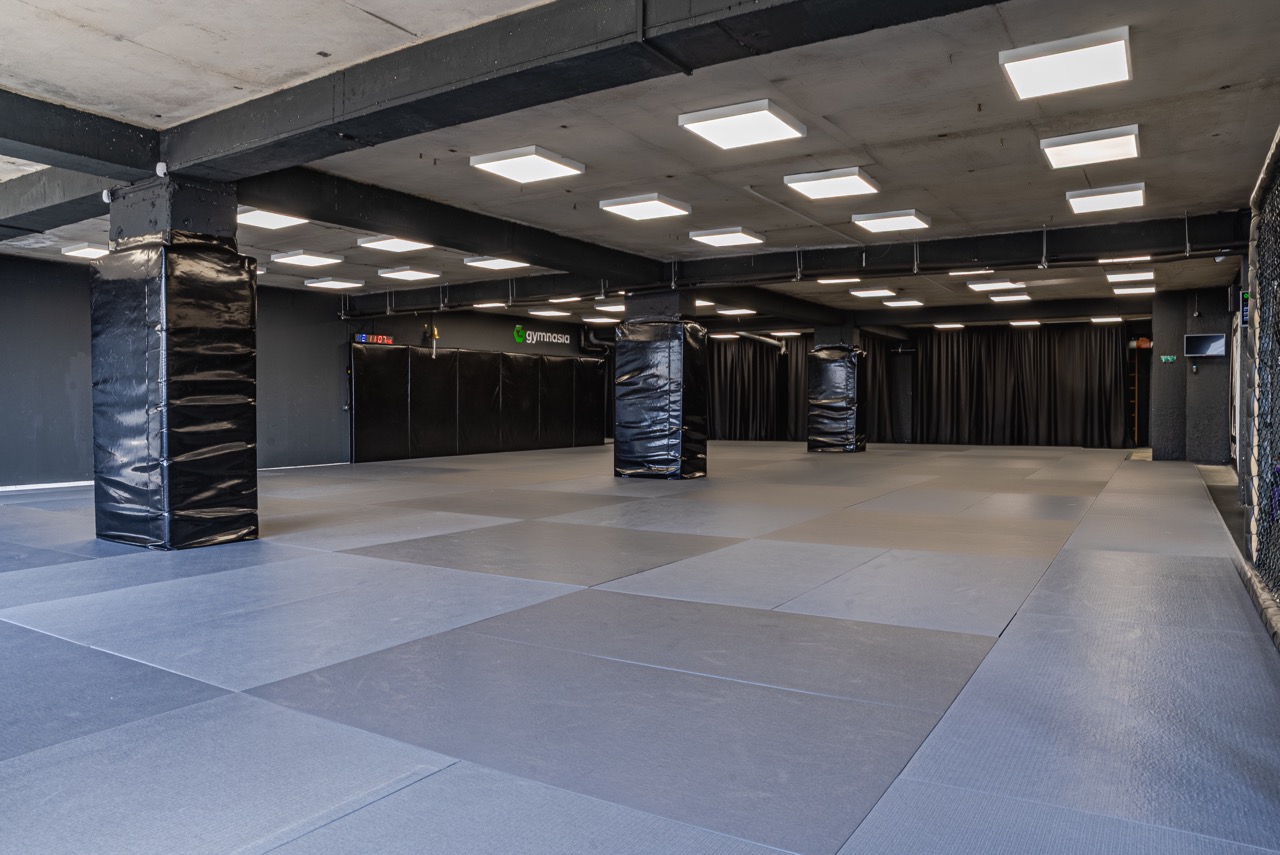
Five things make a camp bookable. A published price with the inclusions itemised, so you know whether a bed and meals are inside the number. A fixed start date, so the flight comes first and hope comes second. A stated module length, so you know what you are committing to. Photographs of the actual training space rather than stock imagery. And a clear answer to who the week is not for — that last one is the fastest way to tell whether a camp has thought about its own product or is just selling weeks.
Two things are deliberately not on that list: coach names and medal counts. Both read well and neither survives contact with a schedule, because the person on the poster is not necessarily the person taking your session on a Thursday. What matters far more is whether the room trains your sport all year round or only in the weeks when visitors are paying for it.
Everything below is written against those five criteria. If another camp anywhere in Georgia clears them, book that one instead — the checklist is the useful part, not the brand.
The six camps, and who each one is for
The six camps share a building, a calendar and a price list, and very little else. Each runs its own coaching team, its own site and its own bookings, so the decision in front of you is genuinely a choice of sport rather than of package.
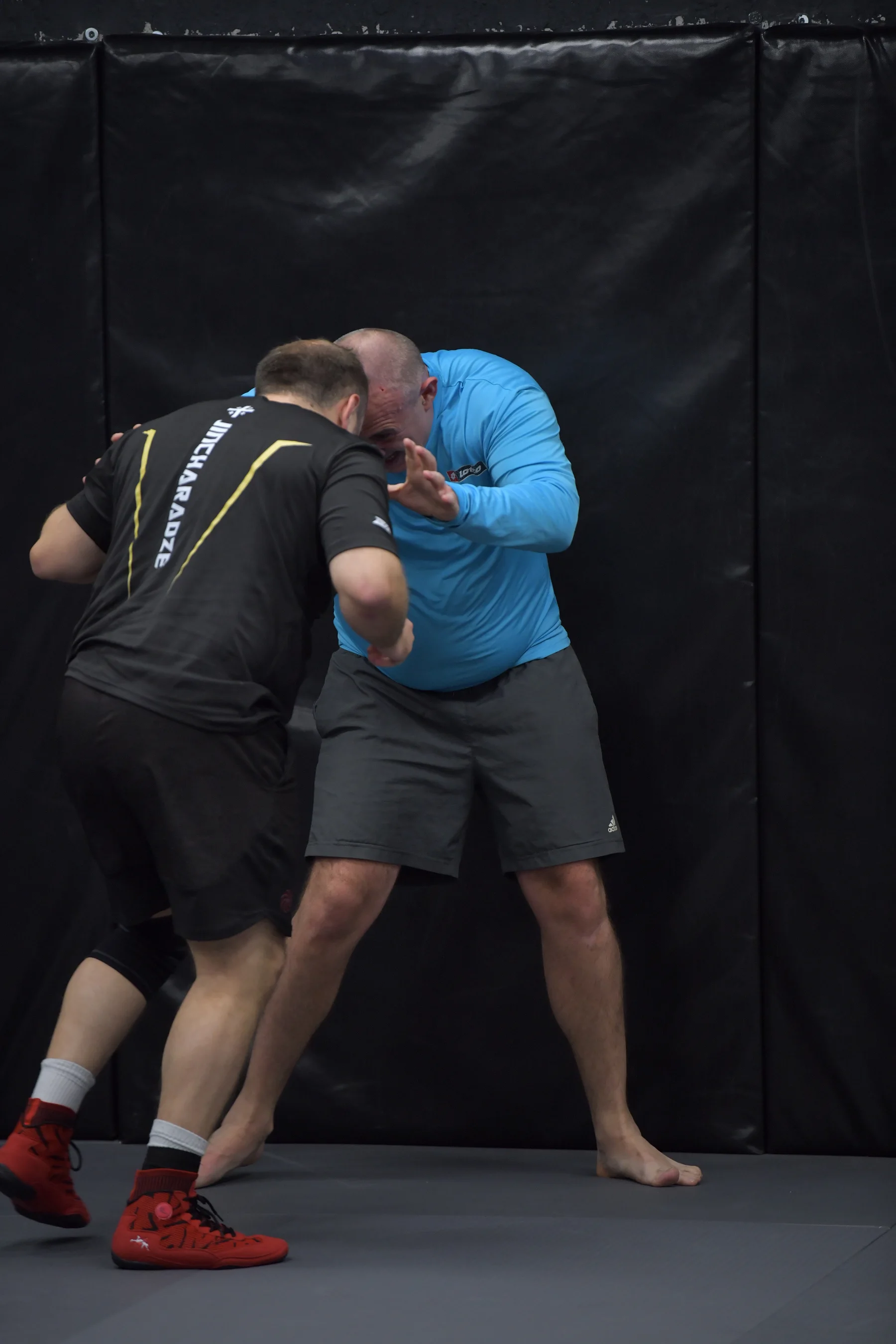
Wrestling is the flagship and the most defensible reason to fly here. Georgia has won more Olympic medals in wrestling than in any other sport, and chidaoba — the traditional jacketed wrestling the modern styles grew out of — has been on the UNESCO Intangible Cultural Heritage list since 2018. Expect hand fighting, entries and mat returns repeated well past the point of comfort.
Judo has its own tatami and the deepest lineage of the six: Georgian judoka won more medals for the USSR than those of any other republic, and that coaching tradition never left the country. Pick it if grip fighting and throws are the gap in your game.
MMA is the pick if you want the cage rather than the ring. Georgian MMA is built on a wrestling and sambo base, so takedowns and top control are the strongest part of the week — and the weaker choice if what you actually wanted was a pure striking block.
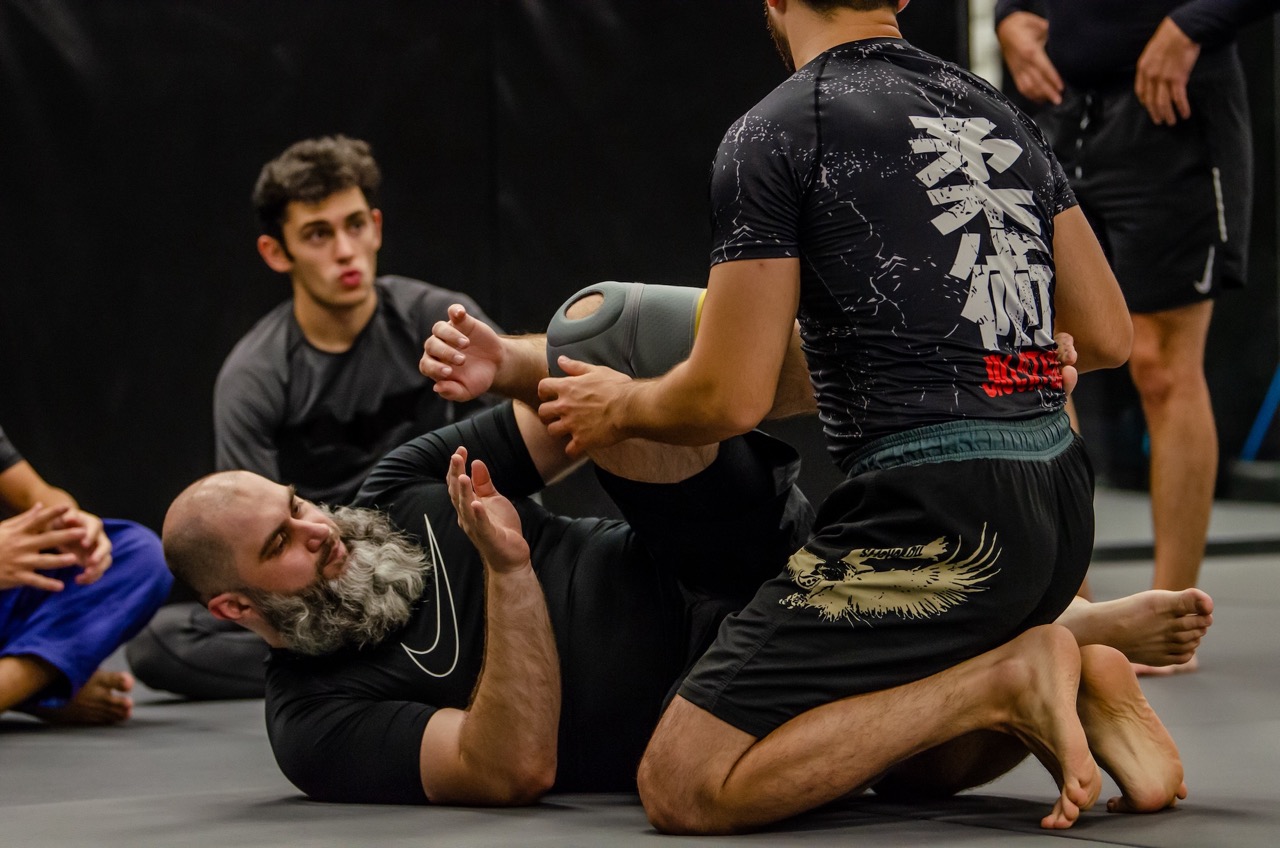
BJJ here is not a substitute for Brazil and does not pretend to be. Its value is the training partners: rolling with wrestlers and judoka changes your guard retention and takedown defence faster than another room full of jiu-jitsu players ever will. Gi and no-gi both run.
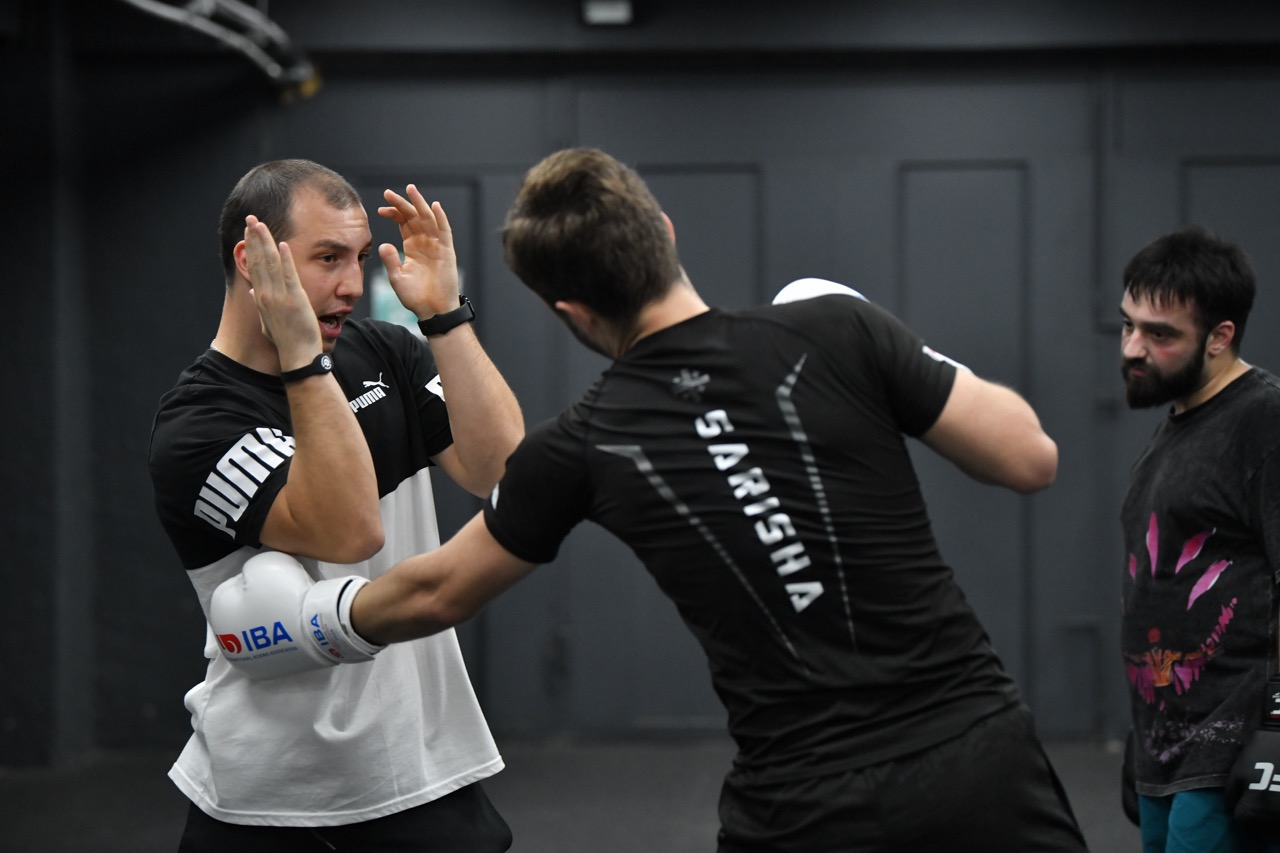
Boxing has its own zone with a competition ring and coaching that scales from first-time technique through to fight preparation, which makes it the most level-agnostic of the six. A beginner and someone six weeks out from a bout can use the same week without either being wasted.
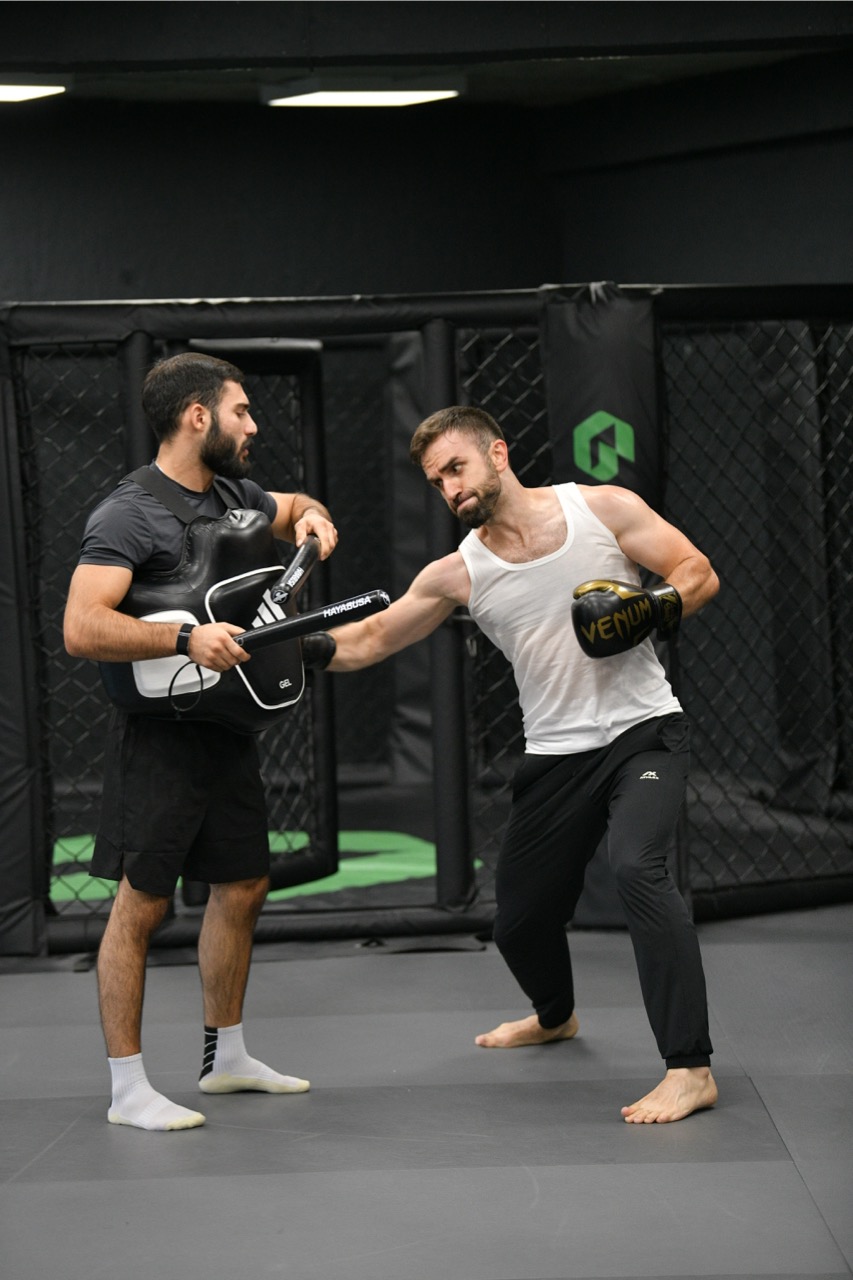
Kickboxing is the only camp that ships two tracks — a conditioning-led fitness week and a fighter week — run by the same coaches, so you can switch after day one if you guessed wrong about your own appetite. That makes it the safest booking if you are not yet sure how hard you want the week to be.
If two of those descriptions fit you, book the sport you are worse at. One week is long enough to fix one thing, and not much more.
What the price covers, and what it does not
There are two shapes of week. Training only, at EUR 500, with no hotel — the right choice if you already have somewhere to stay in Tbilisi or you are bolting a camp onto a longer trip. And full board, which is training, meals and the hotel in a single number, starting at EUR 990 for a week in a shared room, with a private room adding EUR 200 per week.
Read what is in that number literally: training, meals, hotel. What is not in it is everything before the door — flights, travel insurance, gear you should already own, and anything you would be buying at home anyway. If something specific matters to you, an airport pickup or a dietary pattern or laundry or a rest-day massage, ask before you pay rather than assuming it is bundled. A camp that answers that question precisely is the one worth booking; the answer itself matters less than the precision.
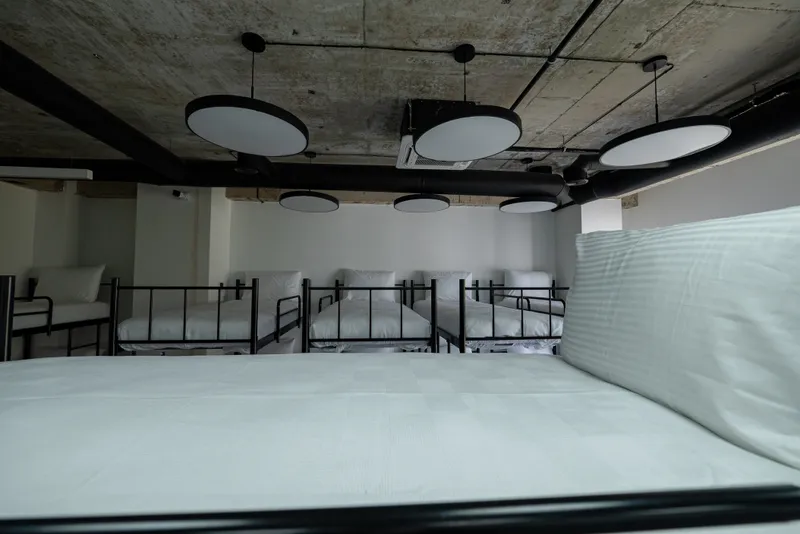
The shared room is a genuinely shared room: bunks, several athletes, the same arrangement teams use at competitions. At this price that is a feature, and if you sleep badly it is a problem — which is exactly what the private-room surcharge exists for. Decide honestly, because a week of bad sleep costs more training than the upgrade costs money.
The fourteen-day modules earn their place in the second week, which is where technique from the first week starts holding up under real resistance instead of only in drilling. If the budget only stretches to one, take the seven-day module and come back, rather than thinning out a fortnight.
Training Week
€500
Training-only week; hotel is not included.
7-day full board, shared room
€990
Training, meals, hotel, and shared-room accommodation.
7-day full board, private room
€1,190
Training, meals, hotel, and a private room (+EUR 200 per week).
14-day full board, shared room
€1,980
Two weeks of training, meals, hotel, and a shared room.
14-day full board, private room
€2,380
Two weeks of training, meals, hotel, and a private room.
How the 2026 calendar works
Dates are the part most people get wrong. Camps do not run on demand, and they do not wait for a group to fill: a module starts on the first Tuesday of every month and runs either seven or fourteen days, ending on a Monday. That is the whole system, and it is why you can book flights before you have finished choosing a camp.
Practically, that means flying in on the Sunday or Monday so that Tuesday morning is a training session rather than recovery from a night flight. It means flying out on the Tuesday rather than the Monday evening if the last day matters to you. And if you are torn between two months, take the one where you can arrive a full day early — jet lag costs more training than a hotel night costs money.
A fourteen-day module means one arrival, one departure and thirteen nights in the same bed, so the effort per training day is far lower than running two separate seven-day trips. It is also the only version of this trip where a genuine rest day does not feel like waste.
Every module for every camp sits on one page, so you can line up a seven-day and a fourteen-day start against your own flight options before you talk to anyone.
Red flags, and the three questions to ask before you pay
The failure mode of a training trip is almost never a bad gym. It is arriving to discover that the week you bought is not the week that was advertised. Three questions catch most of it.
What exactly is included, as a list? A camp that answers with a paragraph of adjectives instead of a list of nouns has not decided yet, and you will be the one who finds out where the gaps are.
Who is coaching my sessions, and do they coach this every week or only during camps? You are not owed a famous name. You are owed a room that runs your sport all year, with training partners who were going to be there anyway.
What happens if I get injured on day two, or my flight is cancelled? The answer is allowed to be strict — a booked bed is often non-refundable, and a camp that tells you so before you pay is being straight with you. It is the absence of an answer that should worry you.
Two more warning signs worth naming. A camp that will not publish dates is usually assembling the week around whoever books. A camp that will not show you its mat space in a photograph you can place is usually a booking layer over somebody else's gym. Neither is fraud, and both leave you with less training than you paid for.
Ask all six camps at once
One enquiry reaches whichever camp fits your sport. Send the sport, your level and the month, and you get dates, the price and what the week actually looks like.
Send one enquiryThe shortlist, in one paragraph
If you wrestle or do judo, this is one of the best places in the world to spend a training week and the only real question is which of the two. If you train MMA, come for the takedowns and the cage and accept that striking is the smaller half of the week. If you do BJJ, come for the partners rather than the lineage. If you box or kickbox, you are buying a well-equipped, level-flexible week rather than a pilgrimage, which for most amateurs is the more useful purchase anyway. And if you genuinely do not know, kickboxing is the most forgiving place to be wrong, because the two tracks let you change your mind on day one.
Then pick the length and pick the month, in that order, and book the flight first. All six camps run off the same first-Tuesday calendar, which means the month is the one decision you can afford to make last.
What to take away
- Judge a camp on what you can verify from home: an itemised price, fixed dates, a stated module length, real photos of the mat space, and a straight answer about who the week is not for.
- All six camps share one Tbilisi facility, one calendar and one price list, so the decision is which sport, then how long.
- Wrestling and judo are the strongest reasons to fly to Georgia. BJJ and MMA benefit from the same grappling depth from the other direction.
- Full board is training, meals and the hotel in one number from EUR 990. Flights, insurance and gear are yours.
- Modules start on the first Tuesday of the month — book flights around that date and arrive a day early.
Questions people ask
Which combat sports camp in Georgia should a complete beginner book?
Boxing or kickboxing. Boxing coaching scales from first-time technique upward, and kickboxing runs a conditioning-led fitness track alongside its fighter track, so a beginner is never the only person in the room working at that level. Wrestling and judo also take beginners, but expect a high volume of repetition from day one.
How much does a combat sports camp in Georgia cost?
Training only is EUR 500 per week with no hotel. Full board — training, meals and the hotel — starts at EUR 990 for a week in a shared room, and a private room adds EUR 200 per week. Fourteen-day versions of both room types are on the price table above.
Do the six camps train together?
They share the facility and the calendar, not the sessions. Each camp has its own coaching team and takes its own bookings, which is what lets a mixed group — a boxer, a wrestler and two jiu-jitsu players — travel on the same week and still train their own sport.
When do the 2026 camps start?
Every camp starts on the first Tuesday of the month and runs as a seven-day or fourteen-day module, ending on a Monday. The dates page lists every upcoming module so you can match one to your flights.
Can I do a camp without the hotel?
Yes. The training-only week is EUR 500 and explicitly excludes the hotel, which suits people already living in Tbilisi, people staying with friends, and anyone extending the trip well past the camp itself.
Keep reading
Combat Sports Training Camps in Georgia
Six camps, one Tbilisi facility: MMA, Wrestling, Boxing, Kickboxing, BJJ, Judo. What a week costs, how the 7- and 14-day modules run, and which camp fits you.
Read guide
The Best Country to Train Martial Arts Abroad: Georgia, Thailand or Brazil
Georgia, Thailand or Brazil? A sport-by-sport comparison of where to train martial arts abroad, with the real cost of a week, visa friction and flight logistics.
Read guide
What a Training Camp Is Like: A Week at a Georgian Combat Camp
What a training camp is actually like, day by day: the first session, the two-session rhythm, the day it hurts, the food, the rest day and what you take home.
Read guide
Train it in Tbilisi
Each camp runs its own coaching team and takes its own bookings. Start with the overview here, then book on the camp site.