Inside the week
What a Training Camp Is Like: A Week at a Georgian Combat Camp
What a training camp is actually like, day by day: the first session, the two-session rhythm, the day it hurts, the food, the rest day and what you take home.
Quick answer
A camp week is two sessions a day, six days a week, with one rest day: technique and drilling in the morning, live work or conditioning in the afternoon. A seven-day module runs Tuesday to Monday, so you get six training days, twelve coached sessions and Sunday off.
The arc is predictable. Day one is an assessment, days two and three are repetition, somewhere around day four everything hurts, and by the weekend the corrections start appearing on their own without you thinking about them.
It is nothing like a holiday with training attached, and nothing like a boot camp either. The volume is high but the coaching is specific, and beginners and competitors run separate tracks inside the same camp.
Rhythm
2 sessions a day, 6 days a week
One week
12 coached sessions
Rest
Sunday off
Levels
Beginner and competitor tracks
The shape of the week
Every one of the six camps in Tbilisi — MMA, wrestling, boxing, kickboxing, BJJ and judo — runs the same weekly frame: two sessions a day, six days a week, technique and drilling in the morning, live work or conditioning in the afternoon, and Sunday off. Modules open on the first Tuesday of the month, so a seven-day block runs Tuesday to Monday and a fourteen-day block runs to the Monday two weeks later.
What that frame does to you is more predictable than most people expect. A camp week has a shape, and knowing the shape in advance is most of what stops people panicking in the middle of it.
The table below is the arc of a seven-day module. On a fortnight, the same arc happens twice, except that the second week starts from a much higher base and is where the real change happens.
The day before
Land, eat, sleep
Unpack, find the facility, and do nothing else. No test session.
Day 1 — Tuesday
An assessment wearing the clothes of a class
Coaches watch how you actually move, then split the room by level.
Days 2–3 — Wed, Thu
The technical spine of your week
The same two or three corrections, repeated at manageable pressure.
Day 4 — Friday
The wall
Everything aches and nothing feels smooth. This is normal and it passes.
Day 5 — Saturday
Live rounds and problem solving
The corrections start showing up without you consciously trying.
Day 6 — Sunday
Rest day
No sessions. Sleep, eat, or leave the city for the day.
Day 7 — Monday
Last sessions and a take-home plan
Lighter work, and two or three things specific enough to keep training.
Day one: they watch you before they teach you
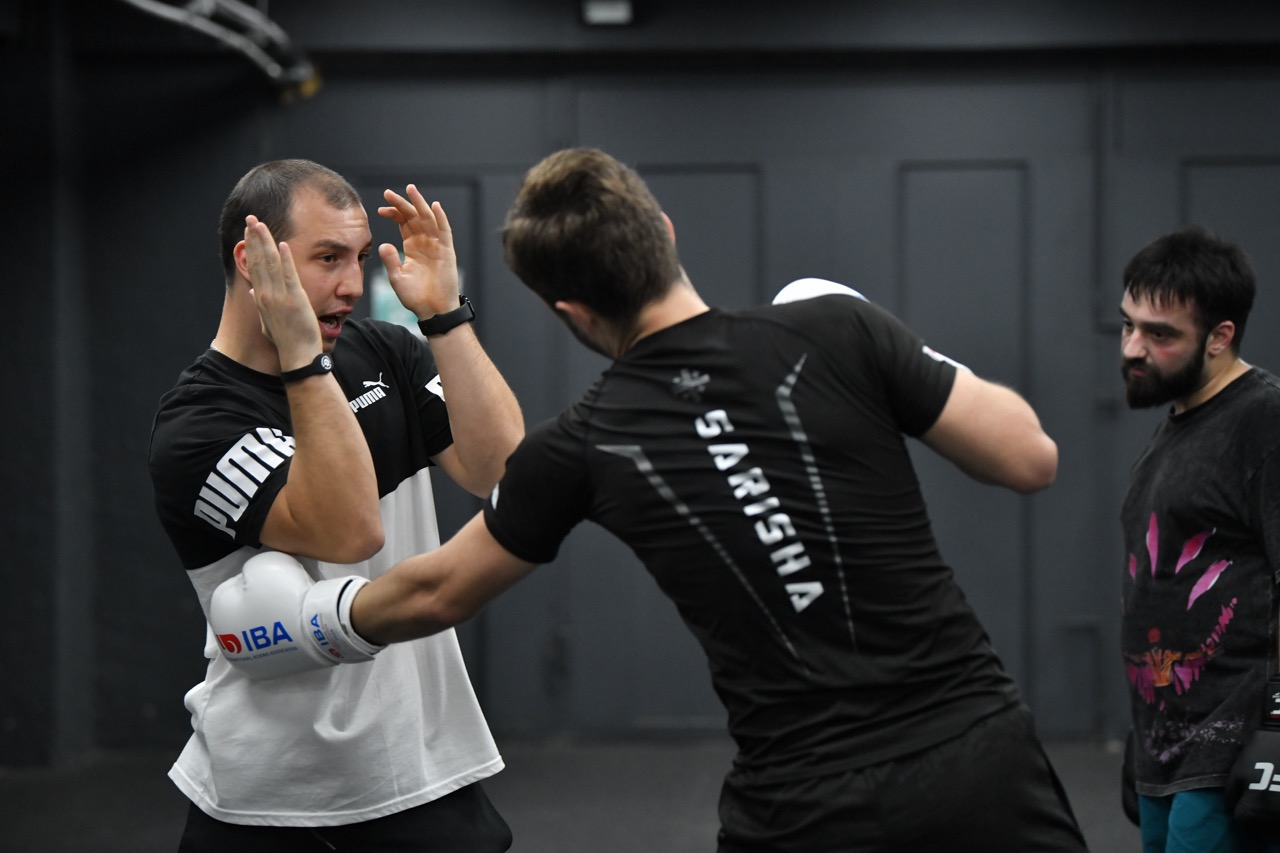
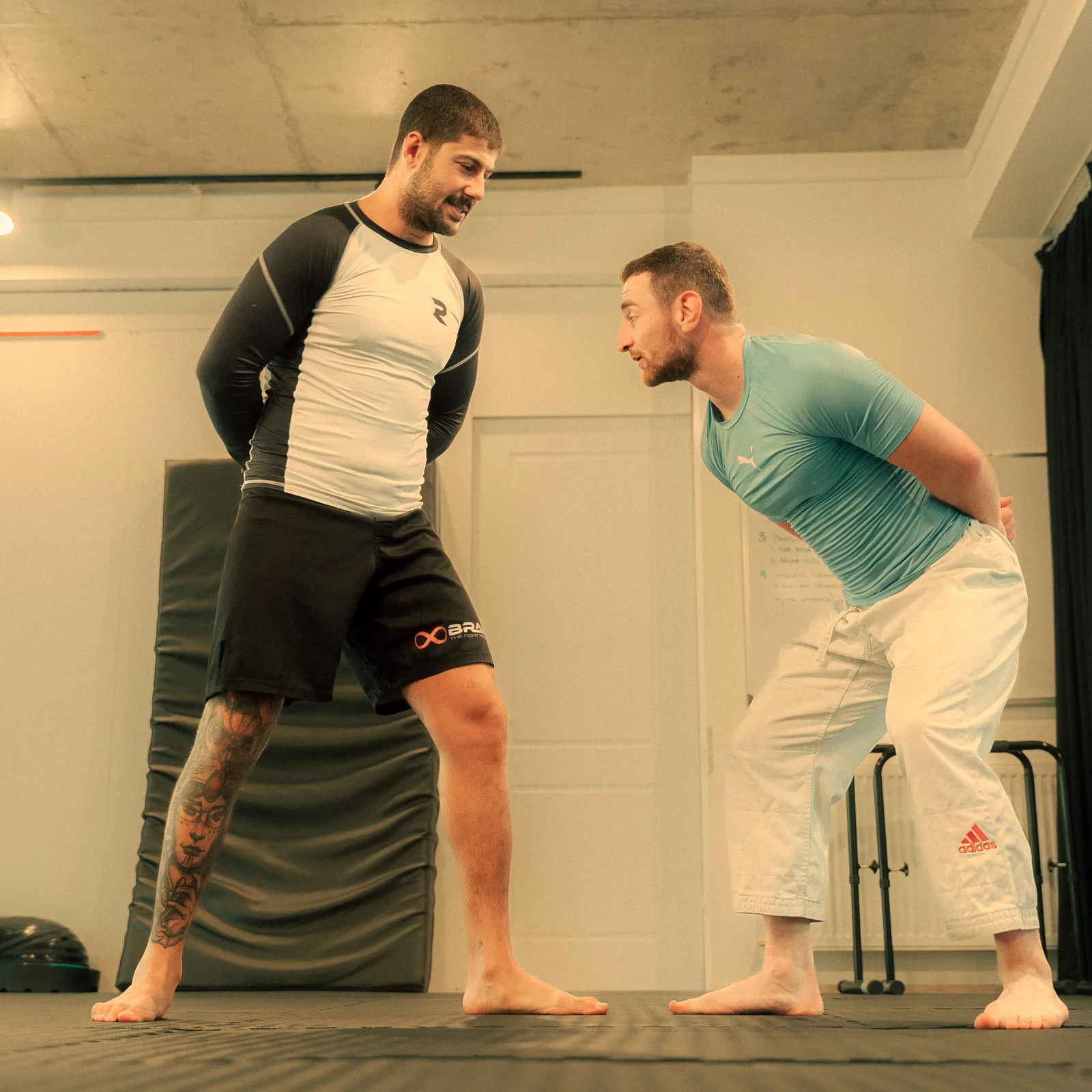
The first session is not where the coaching starts. It is where the coaching is decided. Whatever the warm-up and the first drill look like on paper, what is happening is that the coaches are reading your posture, your grip, your balance, how you fall, what you do when someone puts weight on you, and which side you favour without noticing. The room gets split by level after that session, not before it.
This is why it pays to arrive honest instead of impressive. If your striking is decent and your wrestling is mostly theoretical, let the first session show it. Beginners and competitors train in the same camp on separate tracks, and the fastest way to end up in the wrong track is to go too hard on day one to prove something to strangers who are not judging you.
The other reason to hold back is arithmetic. You have twelve sessions in a week, or twenty-four in a fortnight, and a tweaked knee in the first ninety minutes costs you all of them. Nobody has ever won a camp on Tuesday.
The two-session day
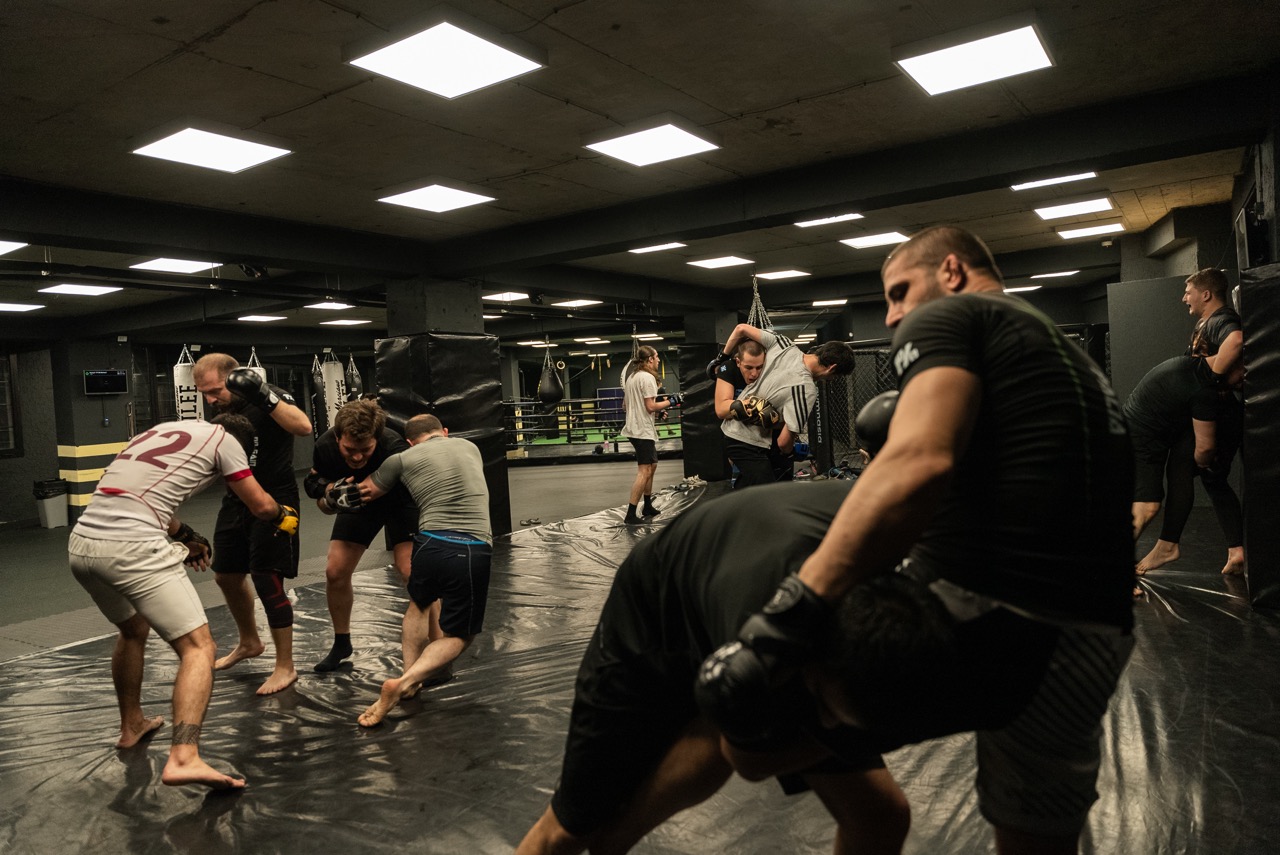
A training day has a rhythm rather than a timetable you need to memorise. Breakfast, then the morning session — technique, drilling, positional work, correction. Then a long midday gap: food, and enough time to lie down properly rather than just sit somewhere. Then the afternoon session, which is where the morning gets tested, in live rounds or conditioning depending on the sport and the day. Then dinner, then sleep, earlier than you would at home.
The exact clock times belong to your camp and your module, and the camp site for your sport publishes them along with the sessions, so check there rather than planning your flights around a guess.
The gap in the middle is the part first-timers get wrong. It looks like free time and it is not: it is the reason you can train twice again tomorrow. Tbilisi is a genuinely interesting city and it will still be interesting on Sunday. Four hours of walking on a hot afternoon between two hard sessions is a decision you pay for on Friday.
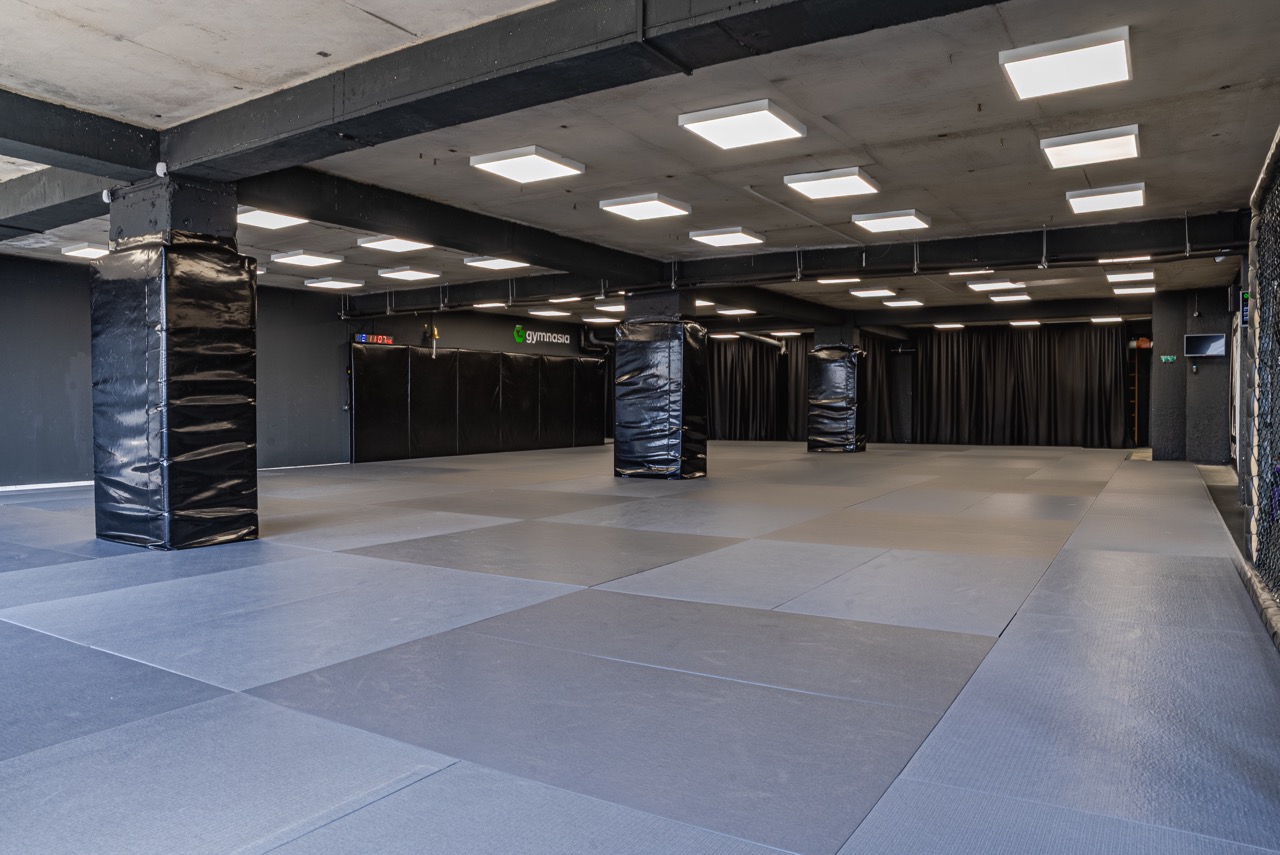
The strength room, the sauna and open-mat time are in the same complex, which is a gift and a trap. Extra rounds cost nothing but recovery, and recovery is the currency the whole week runs on.
Around day four, it hurts
Somewhere between the third and the fifth day, most people hit a flat spot. Everything aches in places that have never ached before, technique that felt sharp on Wednesday feels clumsy, and the small injuries of a contact sport show up all at once: mat burn, sore fingers, a tender neck, ears that are objecting, skin on the tops of your feet if you have been drilling barefoot.
This is not a sign that the camp is too hard for you or that you are unfit. It is what an unfamiliar training load does on the way to adapting, and everyone in the room is quietly experiencing a version of it. It usually lifts by the next session.
What gets you through it is boring and effective. Eat more than you feel like eating. Sleep at a stupid hour. Tap early in rounds instead of proving a point. Ask the coach for the technical group instead of the hard group for one session if you need it — the tracks exist for exactly this. And say something if a niggle is turning into an injury, because coaches can adjust a session but cannot read your shoulder.
One thing not to do: skip the day entirely to feel better tomorrow. A light session, honestly declared, is worth more to you than a day in the hotel and it keeps the week continuous.
Food, sleep and the sauna
On a full-board booking, three meals a day come with the package and they are timed around the sessions rather than around a restaurant. That sounds mundane until you have tried to find a big enough breakfast in a strange city forty minutes before a morning session. Georgian food is also unusually well-suited to a training week — grilled meat, bread, beans, cheese, tomatoes and a lot of it — and portion size is not the local weakness.
Sleep is where a camp week is won. Two sessions a day means the adaptation happens overnight, and no amount of protein compensates for four hours of sleep because you were out late in the old town. If you snore, or your roommate does, pay the private-room surcharge and treat it as training equipment.
The complex has a strength room and a sauna, and open-mat time between sessions. The sauna after the afternoon session is one of the better habits available to you. The extra open-mat rounds are more tempting than they are useful in week one; if you are on a fourteen-day module, save them for the second week when your body has stopped protesting.
Hydration is the unglamorous one. You will sweat more than you plan to, especially in summer, and the first symptom of dehydration in a camp week is not thirst — it is the sensation that your technique has mysteriously got worse.

Who else is in the room
Two groups, mostly. There are visitors, on the same seven- or fourteen-day modules as you, from wherever the flights come in from — and there are local athletes, which is the part that makes this destination different. Georgia has 48 Olympic medals, concentrated in wrestling, judo and weightlifting, Georgian judoka won more medals for the USSR than any other republic, and chidaoba, the country's own jacket-wrestling tradition, has been on the UNESCO Intangible Cultural Heritage list since 2018.
That heritage is not a museum exhibit here, it is the person holding your collar. If you came to do jiu-jitsu, you will be rolling with people whose grip fighting came out of judo and whose takedowns came out of wrestling. If you came to box, you are training in a building full of grapplers, which does something useful to your clinch whether you asked for it or not.
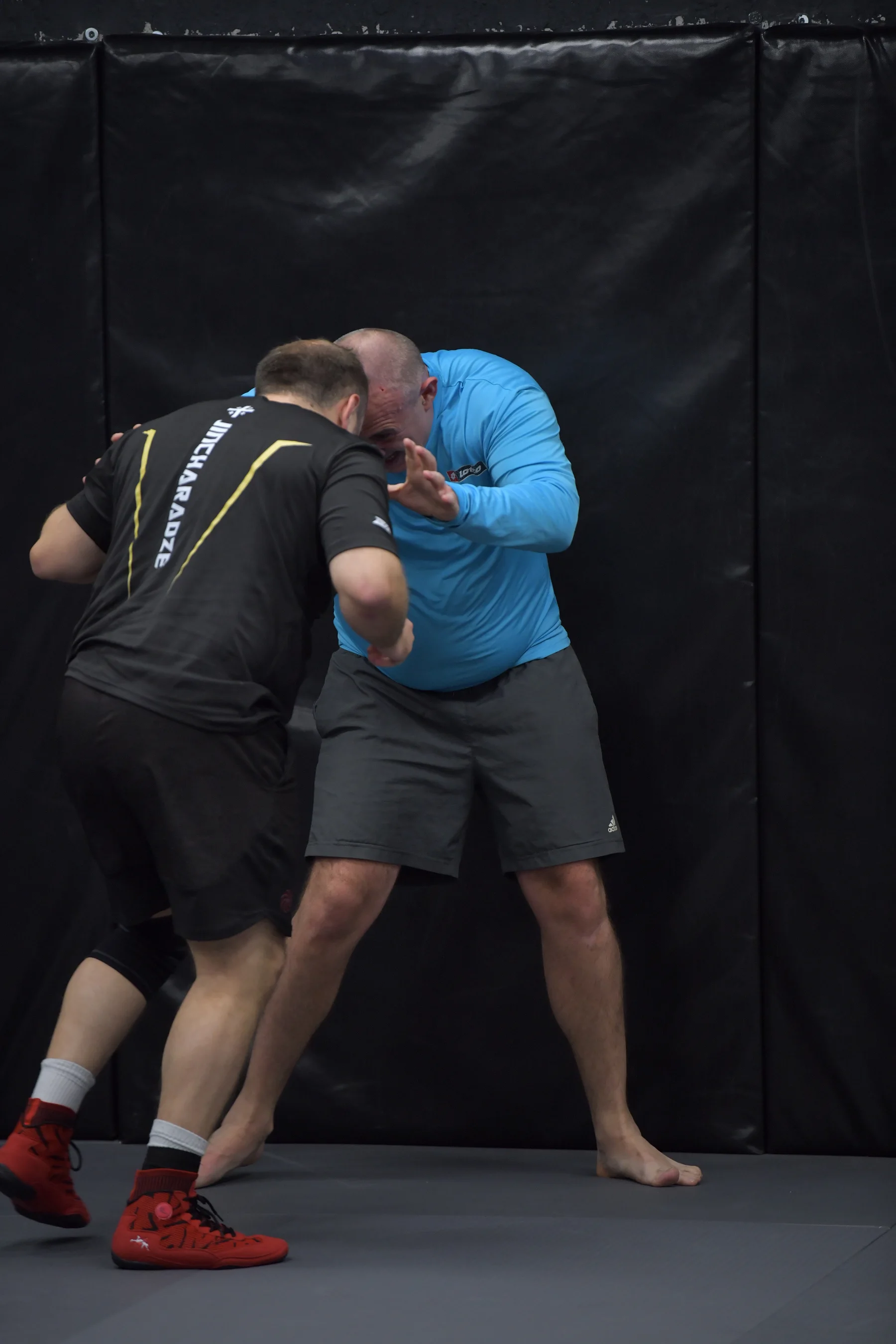
Levels are mixed by design and separated in practice. The adult camps take ages 16 and up, the beginner and competitor tracks run side by side, and the coaches — working competitors and full-time instructors at the complex — split the group after the first session. Nobody is held back, and nobody gets thrown into hard rounds on day two.
English is the working language of a camp week between visitors and coaches, and a mat is a forgiving place to have a language gap: most of the instruction is shown before it is explained.
The rest day
Sunday has no sessions, and how you use it is the clearest signal of whether you understand what you bought. The high-value version is boring: a long sleep, real food, a walk, the sauna, and being horizontal for a chunk of the afternoon. You will train better on Monday than anyone who spent Sunday proving they were on holiday.
That said, this is not a monastery. Tbilisi has sulphur baths that are genuinely good for a beaten-up body, a food culture worth an afternoon, and mountains close enough for a real day trip. If you are on a fourteen-day module, one of your two Sundays can absolutely be the one where you leave the city.
The other thing worth doing on the rest day is thinking. Four days in, you know which of the coach's corrections actually landed. Write down two of them. That short list is what turns a camp into training rather than a memorable week.
What you take home
Realistically: two or three technical changes, a clear picture of what your biggest hole is, some sore ears, and a training standard that makes your home gym feel slow for a fortnight. Twelve coached sessions in six days with the same coaches watching the same problems is a different product from twelve drop-in classes spread across two months, and the difference is that nothing gets forgotten between sessions.
What a week does not do is rebuild you. Seven days is enough to have a habit identified and interrupted; fourteen is where it gets replaced. That is the honest case for the longer module, and it costs the same per week — a training week starts at EUR 500 — so the only real question is how much time and how much load you can take.
The other thing people take home is a slightly different relationship with training. Six consecutive days of being corrected by someone who has watched you move all week is unusual for most amateur athletes, and it tends to change what you expect from a normal Tuesday evening class afterwards.
- Planning a training trip to Georgia: the full checklist
- Cost of a training camp in Georgia, line by line
Pick a week and see the calendar
All six camps open a new module on the first Tuesday of every month, in 7- and 14-day blocks. Find the Tuesday that fits, then send one enquiry.
See every camp dateWhat to take away
- The week is two sessions a day, six days a week, with Sunday off — twelve coached sessions in a seven-day module.
- Day one is an assessment: the coaches split the room by level afterwards, so arrive honest rather than impressive.
- Expect a flat spot around day four. It is a normal response to unfamiliar volume, and eating and sleeping fix it faster than toughing it out.
- The midday gap is recovery time, not sightseeing time. Save the city for the rest day.
- A week interrupts a bad habit; two weeks replaces it. That, not price, is the real difference between the modules.
Questions people ask
How hard is a training camp if I only train twice a week now?
Hard, but survivable, because the tracks are split by level after the first session and the morning sessions are technical rather than a fitness test. The realistic advice is to book seven days rather than fourteen for a first camp, and to use the technical group on the days you need it.
Do I have to do both sessions every day?
The week is built as two a day, and you get the most out of it by doing both. But telling the coach you are taking the afternoon lighter is normal and sensible, especially mid-week. Silently disappearing is what causes problems.
Will I be sparring with people much better than me?
You will train alongside them and learn from watching them, but hard rounds are matched by level and by what the coaches saw on day one. Beginners are not fed to competitors; that is the point of running separate tracks inside the same camp.
What happens on the rest day?
Nothing is scheduled. Most people sleep late, eat, use the sauna and stay off their feet, and some use the day for the sulphur baths or a trip out of Tbilisi. On a two-week module you get two rest days, so one of them can be a real day out.
Is a camp week a holiday?
No, and the people who treat it as one lose the second half of it. It is a training block that happens to be in an interesting city — the city is the reward for the rest day, not the plan for the afternoons.
Keep reading
Planning a Training Trip to Georgia: The Complete Guide
How to plan a training trip to Georgia: booking order, entry rules, flights into Tbilisi, which month to pick, what to pack for six sports, and what it costs.
Read guide
Cost of a Training Camp in Georgia: A Line-by-Line Breakdown
What a training camp in Georgia really costs: the package price, the full-board upgrade, flights, daily spending, and the cost per coached session in Tbilisi.
Read guide
Combat Sports Training Camps in Georgia
Six camps, one Tbilisi facility: MMA, Wrestling, Boxing, Kickboxing, BJJ, Judo. What a week costs, how the 7- and 14-day modules run, and which camp fits you.
Read guide
Train it in Tbilisi
Each camp runs its own coaching team and takes its own bookings. Start with the overview here, then book on the camp site.