Budget
Cost of a Training Camp in Georgia: A Line-by-Line Breakdown
What a training camp in Georgia really costs: the package price, the full-board upgrade, flights, daily spending, and the cost per coached session in Tbilisi.
Quick answer
A training week in Tbilisi costs EUR 500 for training only, or EUR 990 for full board with the hotel, three meals a day and airport transfers in both directions. A private room instead of a shared one adds EUR 200 per week, and two weeks runs at the same weekly rate.
Everything else in your total is travel: flights, which nobody can quote for you, and spending money, which in Tbilisi is genuinely low. Prices are identical across all six camps — MMA, wrestling, boxing, kickboxing, BJJ and judo — so the sport you pick does not change the number.
On the training-only rate that works out at roughly EUR 42 per coached session, because a seven-day module is six training days with two sessions a day.
Training only
EUR 500 / week
Full board
EUR 990 / week
Per coached session
about EUR 42
Same price
All six camps
What the camp itself costs
Start with the part that is fixed and published. All six camps in Tbilisi charge the same, in euros, whichever sport you book, and the two-week modules run at the same weekly rate as the one-week modules. There is no volume discount and no early-bird pricing to chase.
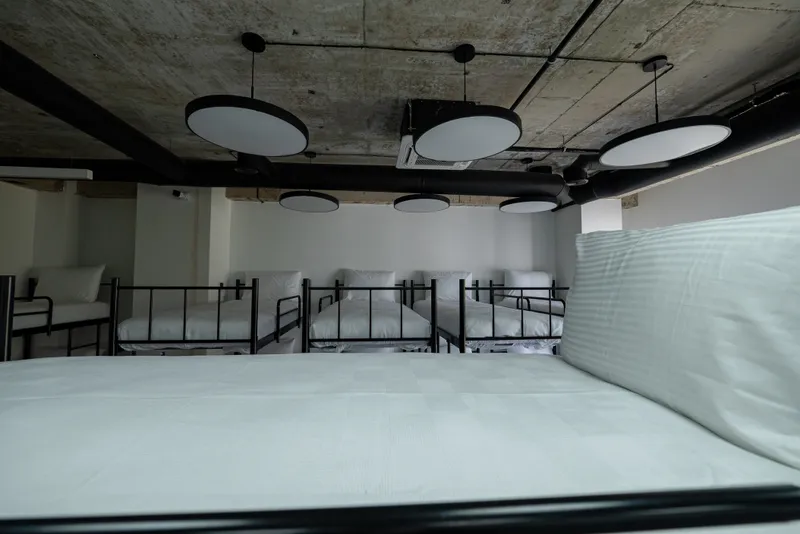
Two shapes are on sale. Training-only is the coaching and the facility, at EUR 500 for the week, with no accommodation. Full board is EUR 990 and adds the hotel, three meals a day and airport transfers in both directions. Swap the shared room for a private one and it is EUR 1190, because the private-room surcharge is EUR 200 per week.
The training is identical in both. Nobody gets a different coach, a different group or a different schedule because of where they sleep, so the package decision is purely about logistics and money.
Because the price does not move between sports, the sport is a training decision rather than a budget one. Each camp takes its own bookings on its own site, and the numbers you see there are the numbers below.
Training Week
€500
Training-only week; hotel is not included.
7-day full board, shared room
€990
Training, meals, hotel, and shared-room accommodation.
7-day full board, private room
€1,190
Training, meals, hotel, and a private room (+EUR 200 per week).
14-day full board, shared room
€1,980
Two weeks of training, meals, hotel, and a shared room.
14-day full board, private room
€2,380
Two weeks of training, meals, hotel, and a private room.
The four numbers that make up your total
Whatever you book, your real total is four lines: the camp package, the bed and the food, the flights, and what you spend on the ground. Only the first two are quoted to you, and they are the two people over-think.
Flights are usually the largest single variable, and the one you have the most control over through routing and timing. Spending money in Tbilisi is the smallest line and the one people over-budget by the widest margin, because they price the city like Western Europe.
One currency note, because it trips people up: the camp packages are quoted in euros, while most cost-of-living figures you will read about Georgia are quoted in US dollars, and what you actually hand over in a shop is Georgian lari. Do the conversion once, before you build the budget, rather than three times while you are inside it.
A sanity check before the detail: on full board, the package and the flight are the only two lines large enough to change your decision. Everything else is small enough that arguing about it will cost you more in time than it saves in lari.
Flights: the number this article cannot give you
Anyone who quotes you a flight price in an article is guessing. What is worth knowing is the shape of the market. Tbilisi International Airport has direct flights from most European hubs and from Istanbul and the Gulf, so almost everyone has both a direct option and a cheaper one-stop option, and the gap between them on the same dates can be large.
Three levers actually move this number. Routing: a connection through Istanbul or a Gulf hub is often materially cheaper than the direct flight. Timing: the camp calendar is fixed on the first Tuesday of the month, so you know your dates months ahead and can watch a route instead of panic-buying it. And arrival day: landing on the Sunday rather than the Monday sometimes costs less, and it buys you a clear day before the first session.
What you should not do is buy the flight before the session is confirmed. A cheap ticket on a week the camp cannot take you is not a saving, and the confirmation usually comes back within a day of the enquiry.
One line disappears from the travel budget if you book full board: the airport transfer is included in both directions, including the small-hours arrivals that a lot of long-haul connections into Tbilisi land at.
What the full-board upgrade actually buys
The interesting number is the difference between the two packages, not the packages themselves. Full board costs EUR 490 more than training-only for a seven-day module. For that you get seven nights in the hotel, twenty-one meals, and two airport transfers — which is about EUR 70 a day, all in.
Could you beat EUR 70 a day yourself in Tbilisi? Honestly, yes. Living costs here are usually quoted at around USD 800 to 1,200 a month — a resident-shaped USD 27 to 40 a day — and both short-term rentals and restaurant food are cheap by European standards. If the goal is the smallest possible invoice, training-only plus your own flat wins.
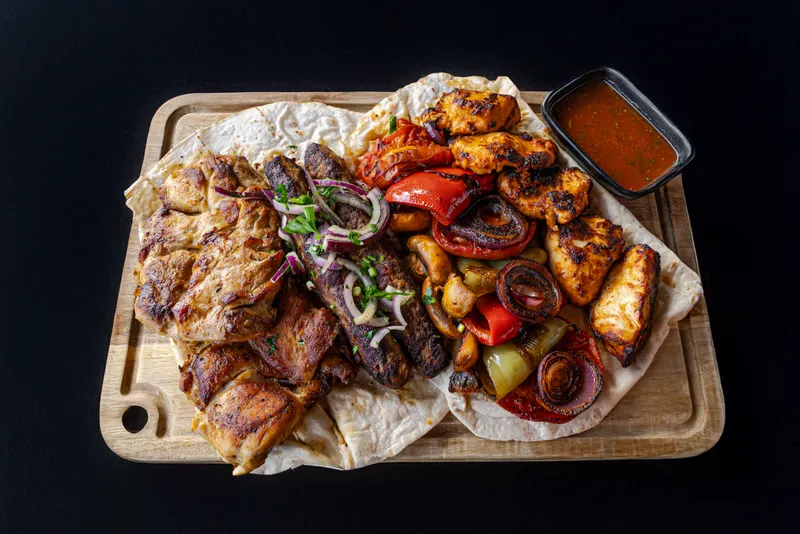
What the upgrade actually buys is the removal of decisions at the exact moments you have no capacity to make them. Breakfast big enough for a morning session, without shopping. Food waiting after the afternoon session, timed around the training rather than around a kitchen. No commute to price, no laundry logistics, no 3am taxi negotiation on arrival. On a two-session-a-day, six-day-a-week schedule, that is not luxury, it is the difference between recovering and merely resting.
The honest split: if you already know Tbilisi, or you are staying longer than the camp, or you simply enjoy running your own week, take training-only and spend the difference on a better flight. If this is your first trip here and the point of the trip is the training, full board is the better purchase even when it is not the cheaper one.
Is a private room worth EUR 200 a week?
The private-room surcharge is EUR 200 per week on top of full board, so about EUR 29 a night. Whether that is money well spent depends almost entirely on how you sleep.
Sharing is fine for most people and it is how most athletes book. You are training twice a day; you will not be awake much, and rooming with someone from the same camp is how half the friendships on a camp week start.
Pay the surcharge if you are a light sleeper, if you snore badly enough to know it, if you are travelling as a couple, or if you are on a two-week module — thirteen nights of broken sleep will cost you more in training quality than the surcharge costs in cash. On a fourteen-day booking the difference is a rounding error against the flight.
What you actually spend on the ground
This is where budgets get padded unnecessarily. On full board your three meals, your bed and your transfers are paid for before you land, so day-to-day spending is coffee, water, snacks, laundry, the occasional taxi and whatever you do on the rest day. Most people find that a modest daily allowance covers it comfortably.
On training-only, add accommodation and food. Tbilisi supports every budget from hostel-and-bakery to good hotel and restaurants twice a day, and the usual USD 800 to 1,200 a month living-cost figure is a reasonable anchor for the middle of that range. Price the specific flat and the specific neighbourhood rather than the average, and check how far it is from the gym.
The lines that genuinely appear on a camp trip, wherever you sleep: a local SIM or eSIM, laundry more often than you expect, tape and a replacement mouthguard, ibuprofen, and one gear item you did not think you needed until day three. Set aside a small buffer for the Sunday too — a day trip out of the city on the rest day is one of the better things you can do with it.
Cash still matters at the margins. Card acceptance in Tbilisi is wide, but small bakeries, markets and marshrutkas prefer notes, and ATMs are everywhere.
Cost per coached session, which is the number that matters
Comparing camp prices by weekly total tells you very little, because weeks are not the same length in training. Here the arithmetic is simple: a seven-day module runs Tuesday to Monday, six training days with Sunday off, and two sessions a day. That is 12 coached sessions, so the training-only rate is about EUR 42 per session and the full-board rate is about EUR 83 per session with the bed and the food included.
Hold that against what an hour of individual attention costs at home, or what a weekend seminar costs, and the comparison stops being about the size of the invoice. You are buying twelve coached sessions with the same coaches watching the same problems across six consecutive days, which is a completely different product from twelve drop-ins spread over two months.
It is also worth pricing the alternative honestly. A fortnight of intensive coaching at home means paying for the sessions and still paying rent, commuting to them, and fitting them around work. The camp price includes the part of the day that usually gets in the way.
The comparison that matters more than either is against the other destinations that sell training weeks — Thailand and Brazil — where the flight is longer, the accommodation market is different, and the sport on offer is not the one Georgia is world-class at.
Why the second week is the cheapest training you will buy
Because the weekly rate does not change, a fourteen-day full-board module is EUR 1980 — exactly twice the seven-day price. The camp gives you no discount for the second week. The saving comes from the lines the camp does not charge for.
You fly once instead of twice. You lose one arrival day and one departure day instead of two of each. And you get twelve training days rather than six, with a rest day inside each week. Measured in coached sessions per euro of total trip cost, including the flight, two weeks is clearly better value than one.
The reason to book seven days anyway is not financial. It is that fourteen days of two-a-days is a lot of unfamiliar volume if you train three times a week at home, and an injury on day three of a fortnight is a much more expensive mistake than the same injury on day three of a week. Value per euro is not the same thing as the right dose.
What is not in the price
Flights are not included in any package, and neither is travel insurance — buy a policy that explicitly covers contact sport, because most standard ones exclude it and that exclusion is the single most expensive thing to discover late.
Also outside the price: your own kit, anything you buy in the city, laundry beyond what the hotel handles, and any medical treatment. A visa is not a cost for most travellers, since citizens of more than 95 countries enter Georgia visa-free for up to a year, but confirm your own passport rather than assuming.
One thing that is easier than people expect: a partner who does not train can stay on the same full-board package without the training component. Mention it in the enquiry and it gets priced properly rather than guessed at.
Get the exact number for your dates
Send one enquiry with the sport, the month, the module length and whether you want full board. The coaching team for that camp comes back with availability and the final price.
Send one enquiryWhat to take away
- The camp price is the same for all six sports: EUR 500 training-only or EUR 990 full board per week, with EUR 200 a week for a private room.
- Full board costs EUR 490 more than training-only per week — about EUR 70 a day for the hotel, three meals and both airport transfers.
- On the training-only rate a coached session works out at roughly EUR 42, because a seven-day module is 12 sessions across six training days.
- Doing your own accommodation in Tbilisi can be cheaper than full board; full board still wins on a first trip because it removes the decisions that compete with recovery.
- Two weeks costs exactly twice one week at the camp, but it is better value per session once you count the flight you only buy once.
Questions people ask
How much does a training camp in Georgia cost in total?
Budget the package plus flights plus a modest daily allowance. The package is EUR 500 training-only or EUR 990 full board for a week, doubled for a fortnight. Flights depend entirely on your route, and on full board there is very little left to spend money on day to day.
Is the price different for MMA, wrestling, boxing or judo?
No. All six camps use the same package prices and the same 7- and 14-day modules, so choose the sport on what you want to train, not on cost.
What is included in the full-board package?
The training, the hotel, three meals a day and airport transfers in both directions. The training component is identical to the training-only package; full board simply adds everything around it.
Can I pay for two weeks and get a discount?
Two-week modules run at the same weekly rate, so there is no discount on the camp price. The genuine saving on a fortnight is on the travel side: one flight and one set of arrival and departure days for twice the training.
Is Georgia cheaper than a training camp in Thailand or Brazil?
It is usually a shorter and cheaper flight from Europe, and living costs on the ground are low. The more useful question is what you are buying: Georgia is world-class at wrestling and judo, which is a different product from a Muay Thai or jiu-jitsu week.
Keep reading
Planning a Training Trip to Georgia: The Complete Guide
How to plan a training trip to Georgia: booking order, entry rules, flights into Tbilisi, which month to pick, what to pack for six sports, and what it costs.
Read guide
What a Training Camp Is Like: A Week at a Georgian Combat Camp
What a training camp is actually like, day by day: the first session, the two-session rhythm, the day it hurts, the food, the rest day and what you take home.
Read guide
Combat Sports Training Camps in Georgia
Six camps, one Tbilisi facility: MMA, Wrestling, Boxing, Kickboxing, BJJ, Judo. What a week costs, how the 7- and 14-day modules run, and which camp fits you.
Read guide
Train it in Tbilisi
Each camp runs its own coaching team and takes its own bookings. Start with the overview here, then book on the camp site.